


Under Western Eyes
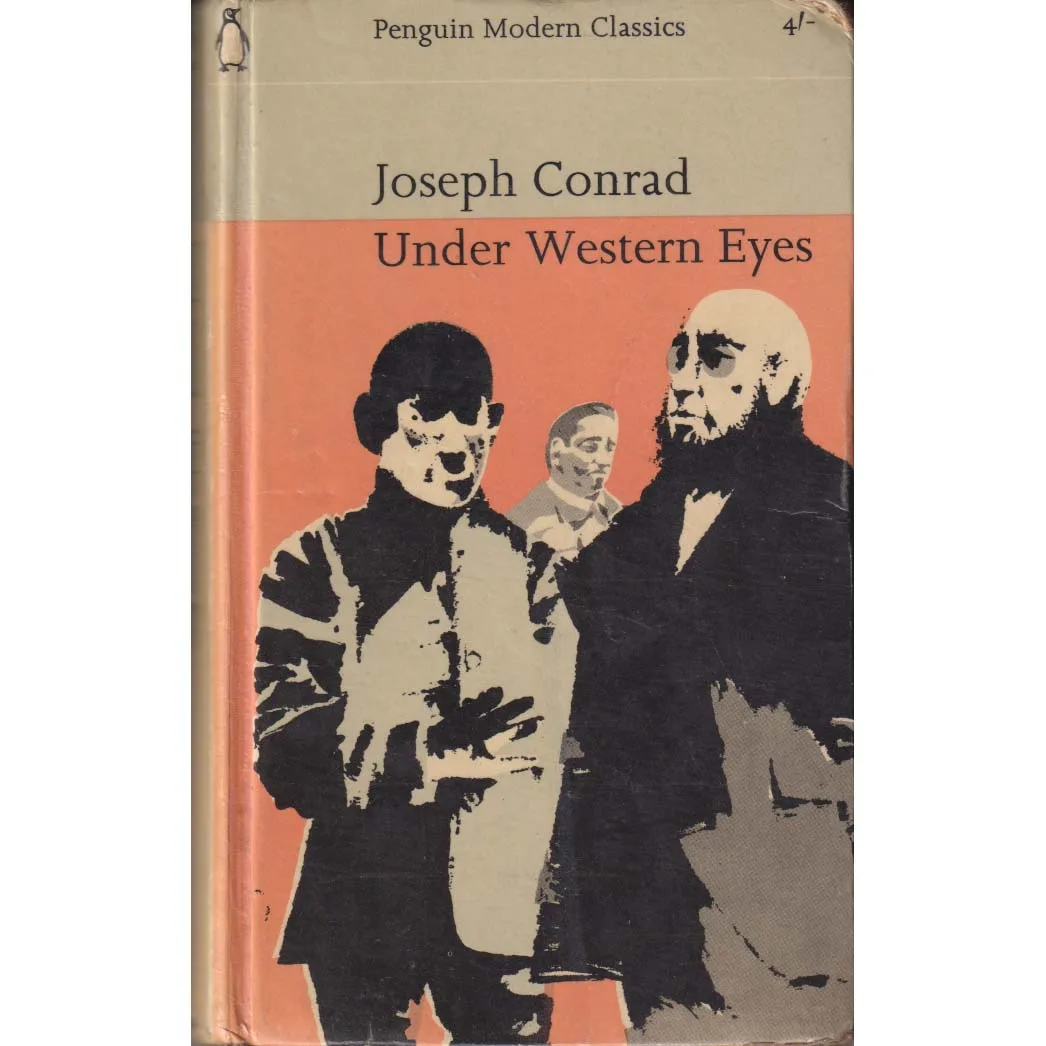
Publisher: Penguin Modern Classics
Format: Hardback
ISBN: none
Under Western Eyes (1964) by Joseph Conrad — Penguin Modern Classics
ISBN: None (because Conrad would consider numbering a bit vulgar)
Condition: Good (as sold by Crappy Old Books)
Extra curiosities: British Institute insert on the inside front cover (Barcelona). Plus an actual handwritten reader review on the inside front page, rating it “Boring”, dated 4 Oct 20019 — either an impressively modern verdict or evidence that time itself has slipped a cog.
Conrad’s Under Western Eyes is the sort of novel that doesn’t so much begin as assemble itself slowly, like a fog rolling in with paperwork. It’s political, psychological, and suspicious of everyone involved—revolutionaries, authorities, idealists, cynics, the lot. If you like your fiction brisk and chirpy, Conrad will not help you. If you like your fiction to feel like you’ve been locked in a room with conscience, compromise, and a national crisis until you admit something about human nature—welcome.
Set against the shadowy pressures of Russian autocracy and revolutionary fervour, this is Conrad doing what he does best: taking a person of uncertain moral footing and placing them in a situation where every choice is tainted. Spies, informers, plots, guilt, loyalty, fear—the whole political machine humming away, impersonal and brutal, while individuals try to pretend they’re still in charge of themselves. Conrad’s special talent is making you feel the weight of the system without turning it into a simple cartoon. Nobody here gets to be purely heroic. Nobody gets to be purely innocent. Even the “principles” have fingerprints.
And yes, it’s also a book about translation—not only of language but of cultures, motives, and inner lives. The title is a clue: what does the “Western eye” see when it looks East? What does it miss? What does it assume? Conrad is forever interested in the gaps between what people say, what they mean, what they fear, and what they can’t admit even to themselves. He is not a novelist of swift reassurance. He is a novelist of slow dawning.
Now, about this particular copy: it comes with a charming little piece of real-world ephemera—a British Institute insert from Barcelona tucked inside the front cover, like a tiny passport stamp from a previous life. It’s the kind of detail that makes a second-hand book feel properly handled, properly travelled, properly part of someone’s story before it got to you.
And then there’s the pièce de résistance: someone has written a review on the inside front page and labelled the book “Boring.” That’s it. No hedging. No nuance. A clean, decisive judgement—dated 4 Oct 20019, which is either a simple slip of the pen or a thrilling confirmation that this copy has been assessed by a reader from the far future. Either way, it’s oddly helpful: a warning label and a dare at the same time.
Because here’s the thing: Conrad can indeed feel “boring” if you’re expecting tidy plot fireworks. Much of his drama happens internally, in hesitation, in implication, in the slow tightening of moral consequence. It’s the literary equivalent of watching a pressure gauge rise. But if you give it a little patience, it’s also deeply absorbing—like discovering that the “boring” bit is actually the human mind trying to survive politics.
This is a 1964 Penguin Modern Classics edition: serious, handsome in that no-nonsense Penguin way, built to be read rather than displayed (though it will do both). Condition is Good—so expect honest vintage wear, maybe a touch of toning, perhaps the faint aura of earnest readers and European journeys—but solid and perfectly readable.
Buy it if you like:
-
political novels that don’t flatter anyone
-
psychological tension served in slow, precise sentences
-
classics with real provenance and marginalia drama
-
books that come with a built-in heckler on the first page
Under Western Eyes is Conrad at his most quietly relentless: an espionage-and-conscience novel that doesn’t sprint, it advances—step by step—until you realise you’ve been thinking about guilt and responsibility like it’s your job. This copy, with its Barcelona insert and its oddly time-warped “BORING” review, is the perfect second-hand companion: a classic with receipts, attitude, and a sense of humour about how modern readers may react.
Keep browsing: See more Modern Classics books Other books by Joseph Conrad
